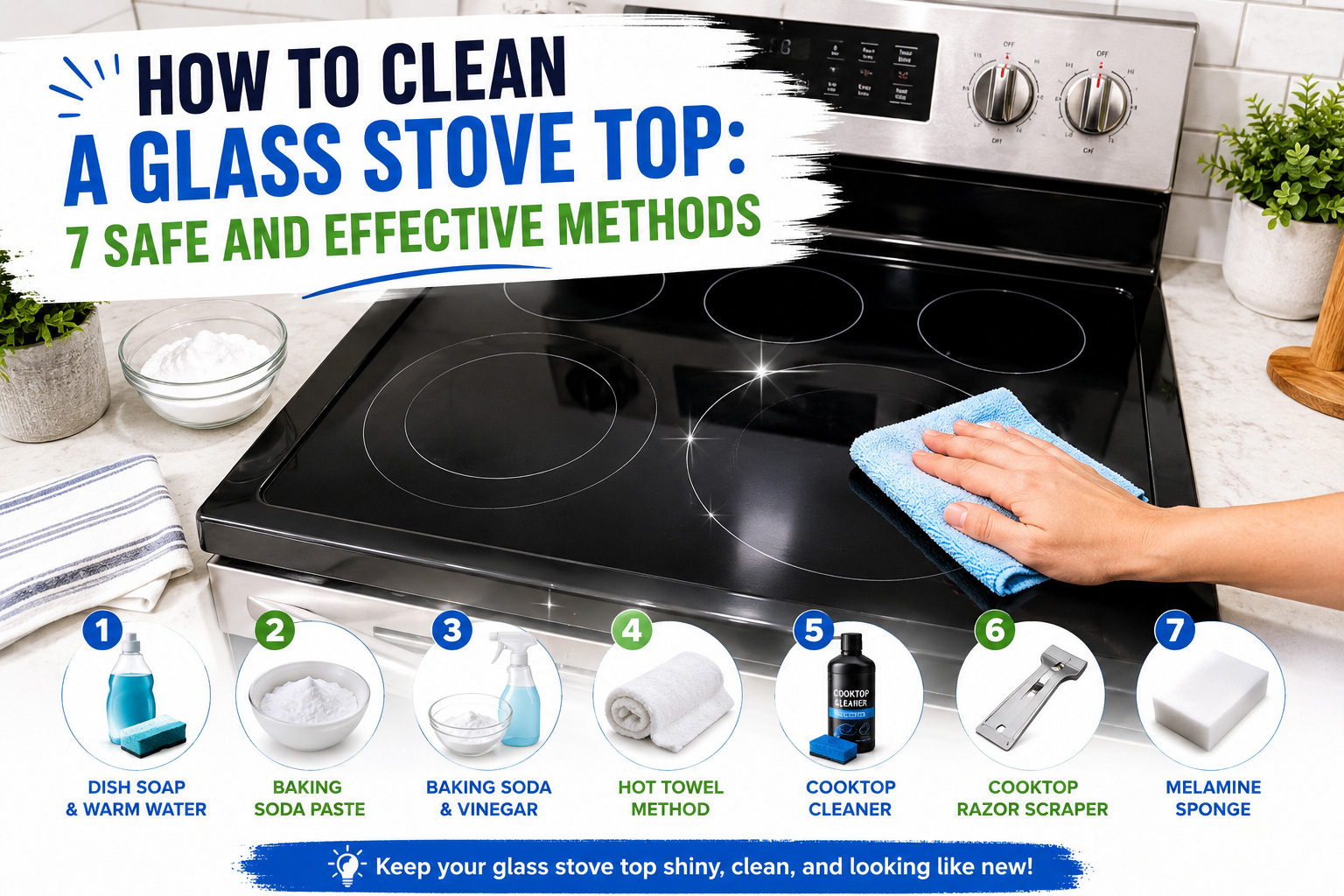
A glass stove top gives your kitchen a clean, modern appearance, but keeping it looking that way can be challenging. Grease, boiled-over food, mineral deposits, and burned-on spills can leave white rings and stubborn stains around the burners.
The good news is that you usually don't need to replace the cooktop or use extremely harsh chemicals. From simple dish soap to a specialized cooktop scraper, there are several ways to restore the surface.
Here are 7 ways to clean a glass or ceramic stove top, starting with the gentlest methods.
1. Dish Soap and Warm Water
For everyday cleaning, dish soap is often all you need.
Mix a few drops of dishwashing liquid with warm water. Dip a soft microfiber cloth or non-scratch sponge into the solution and wipe the entire cooktop.
For greasy areas, allow the soapy water to sit for a few minutes before wiping.
Best for:
Fresh spills, cooking grease, fingerprints, and everyday cleaning.
2. Baking Soda Paste
Baking soda can help loosen more stubborn residue without requiring a strong chemical cleaner.
Mix baking soda with a small amount of water until it forms a paste. Spread the paste over the stained areas and allow it to sit for about 10–15 minutes.
Gently rub the area with a damp microfiber cloth or non-scratch sponge. Wipe away the baking soda and finish with a clean, damp cloth.
Best for:
Moderate stains, grease, and cooked-on food.
Avoid scrubbing aggressively. Even relatively mild abrasives can potentially dull a glass surface when excessive pressure is used.
3. Baking Soda and White Vinegar
For stains that don't come off with baking soda alone, you can combine it with white vinegar.
Sprinkle a small amount of baking soda over the stained area and lightly spray it with white vinegar. Let the mixture fizz and sit for approximately 10–15 minutes.
Wipe everything away with a soft cloth and clean water.
Best for:
Cloudy residue, grease, and some mineral deposits.
4. The Hot Towel Method
Heat and moisture can soften stubborn residue before you start scrubbing.
Wet a towel with hot water and carefully wring it out. Lay the warm, damp towel over the stained areas for approximately 10–15 minutes.
Remove the towel and wipe the softened residue with a microfiber cloth or non-scratch sponge.
You can also combine this method with baking soda for more difficult stains.
Best for:
Dried food and stubborn buildup that needs to be softened first.
5. Ceramic or Glass Cooktop Cleaner
A cleaner specifically formulated for glass-ceramic cooktops is one of the better options for difficult burner rings.
Apply a small amount according to the manufacturer's directions. Work it over the affected area using a cooktop cleaning pad or soft cloth, then buff the surface with a clean microfiber cloth.
Cooktop cleaners can also leave the surface looking more polished than ordinary soap and water.
Best for:
White burner rings, discoloration, cooked-on residue, and regular deep cleaning.
6. Use a Cooktop Razor Scraper for Burned-On Food
When food has become firmly burned onto the glass, wiping and scrubbing may not be enough.
A scraper specifically designed for glass cooktops can remove deposits without requiring excessive scrubbing.
Make sure the cooktop is cool unless your appliance manufacturer's instructions specifically state otherwise. Lubricate the affected area with an appropriate cooktop cleaner and hold the scraper at a low angle, roughly 30–45 degrees.
Carefully push the blade underneath the buildup rather than digging downward into the glass.
Best for:
Thick burned-on food, hardened spills, and stubborn deposits.
Never use the corner of the blade to dig at a stain. Replace damaged or dull blades.
7. Melamine Sponge for Stubborn Residue
A damp melamine sponge, commonly sold as a "magic eraser," can sometimes remove marks that remain after ordinary cleaning.
Use very light pressure and test it on a small area first. Afterward, thoroughly wipe the cooktop with clean water and dry it.
Because melamine is mildly abrasive, I wouldn't make this your first cleaning method.
Best Method for a Very Dirty Glass Stove Top
For a cooktop with heavy white rings and burned-on residue, try the methods in this order:
Hot damp towel → glass cooktop cleaner → non-scratch cleaning pad → cooktop scraper → microfiber polish
Starting with the gentler methods reduces unnecessary abrasion.
If one step removes the stain, there's no reason to move on to something more aggressive.
What NOT to Use on a Glass Stove Top
Be especially careful with abrasive products and tools. Avoid:
- Steel wool
- Sandpaper
- Knives or utility blades not intended for cooktops
- Rough green scouring pads
- Highly abrasive cleaning powders
- Oven cleaner unless your cooktop manufacturer specifically says it is safe
- Excessive pressure when scrubbing or scraping
These can scratch, dull, or otherwise damage the glass.
What If the White Burner Rings Won't Come Off?
This is an important distinction.
Not every white or cloudy mark on a glass stove top is dirt.
Cookware can leave metal deposits, while hard water and spills can leave mineral deposits. These may respond to cleaning.
However, repeated high-temperature cooking and spills can sometimes cause etching, pitting, scratches, or permanent discoloration.
After thoroughly cleaning the area, run your finger across it once the cooktop is completely cool. If the surface is smooth but the discoloration remains unchanged after appropriate cleaning, the appearance may be permanent rather than something sitting on top of the glass.
Continuing to scrub harder may only make the surface worse.
How to Keep Your Glass Stove Top Clean
The easiest stains to remove are the ones that never have a chance to become baked on. Once the stove has cooled, wipe up spills rather than allowing them to go through several heating cycles.
For regular maintenance, a microfiber cloth with a little dish soap and water is usually sufficient. Use a dedicated glass cooktop cleaner periodically for deeper cleaning and polishing.
Also keep the bottoms of pots and pans clean. Residue underneath cookware can become baked onto the cooktop when the burner gets hot.
Final Thoughts
You don't necessarily need harsh chemicals to clean a glass stove top. Start with dish soap, warm water, baking soda, or a hot towel for lighter stains. Move to a dedicated ceramic cooktop cleaner and cooktop scraper when dealing with stubborn burned-on deposits.
Most importantly, don't assume that harder scrubbing means better cleaning. Glass cooktops can scratch, and some discoloration may already be permanent.
Using the gentlest effective method will help keep your cooktop clean, shiny, and in good condition for years to come.